The enameling and decoration process of mugs
Enameling is much more than simply giving a metal vessel color. It is a multi-stage process where surface preparation, coating application, firing, and quality control directly affect the appearance, durability, and functionality of the finished product.
Although a finished enamel mug, bowl, or plate may look like a simple object, its creation requires a combination of material, technology, experience, and precision. At Emalia Mart, the production process takes place from start to finish in our workshop. It is precisely this combination of traditional techniques with a modern approach that allows us to create both classic enamelware and custom-designed products.
Everything Starts with the Metal Form
The first element of every vessel is its metal body. It gives the product its shape and provides its basic structure. At this stage, manufacturing precision is extremely important. Every form must have the correct shape, dimensions, and surface condition, as subsequent process steps directly depend on the quality of the prepared substrate.

Surface Preparation – The Invisible Step in the Finished Product
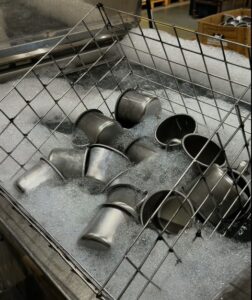
One of the most critical steps is proper metal surface preparation. The surface must be cleaned and prepared so that the enamel can bind properly with it. Removing contaminants and appropriately preparing the substrate are vital for the subsequent quality of the coating. This is a step that customers rarely notice when looking at a finished mug or bowl. However, it is one of the foundations of the entire process.
Enamel Application
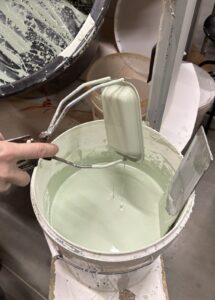
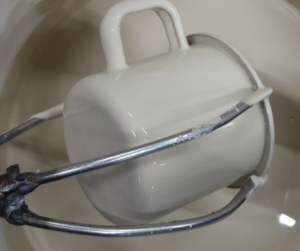
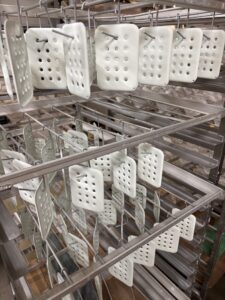
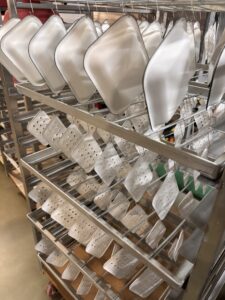
Next, the prepared metal body moves to the next step – enamel application. This is where the importance of experience becomes particularly evident. The enamel must be applied in a way that ensures proper surface coverage. Excess or insufficient material, improper surface preparation, or inaccuracy during application can affect the final result. At Emalia Mart, this process is performed manually. This means every product is backed by the skills of craftspeople who have been perfecting enameling techniques for years. First, a ground coat enamel is applied, followed by the enamel in the selected color.
Firing – The Moment the Actual Coating Is Formed
The next key step is firing. Under high temperatures, the coating undergoes a transformation through which it achieves its characteristic properties and fuses permanently with the metal substrate. During firing, process parameters—including temperature, duration, and process control—are critical. Choosing them correctly ensures the desired surface finish and appearance. Once the firing process is complete, the vessel must cool down. Only then can the result be thoroughly evaluated.
Decoration – Giving the Vessel Its Character
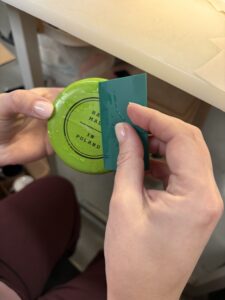
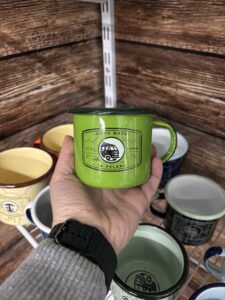
Enamel serves not only as a protective coating but also as a base for decoration. Color, contrasting rims, patterns, or logos allow the product to gain an individual character. This is particularly important for custom orders. At Emalia Mart, custom designs can be decorated to client specifications. As a result, the same vessel type can become a promotional item, a brand identity element, restaurant equipment, or simply a unique everyday object.
Final Inspection and Product Preparation
The final step is inspecting the finished product and preparing it for use or shipment. The appearance of the vessel, coating quality, and decoration execution are checked. Only after passing inspection can the product be delivered to the customer. For custom production, the process does not end when the piece leaves the kiln. Verifying that the finished product matches the design specifications is equally important.
Traditional Technique in Modern Manufacturing
Enameling has a long history, but that does not mean it belongs exclusively to the past. Modern enamelware combines a classic look with custom design and the demands of contemporary clients. Emalia Mart produces mugs, bowls, plates, soap dishes, and other items, while also executing tailored custom projects. This ability to combine the traditional character of enamel with personalization makes this material applicable not only in the kitchen, but also in gastronomy, hospitality, tourism, promotional campaigns, and special projects.
From Metal to Finished Vessel
The production process can be summarized in the following steps: metal form → surface preparation → ground coat application → firing → cooling → color enamel application (sometimes multiple coats depending on the color scheme) → firing → cooling → decal/printing application → firing → quality control → finished product
Every step matters. No single step alone determines quality. It is the sum of many operations, experience, and quality control that turns a metal body into a durable, functional piece of enamelware. And that is precisely what is not immediately visible when holding a finished mug. We see a simple object. Yet behind its creation stands a complete process. Enameling is the fusion of metal, glass enamel, high temperature, precision, and human craftsmanship.
Gabriela Tomal